OpenAI says its AI disproved the Exponential Time Hypothesis, and two of the rule's authors will check it
- OpenAI says an unreleased AI model found a fast way to count the answers to a classic logic puzzle, which would prove the Exponential Time Hypothesis false.
- Nothing is peer-reviewed. Three computer scientists, two of whom proposed the rule in 1999, will lead an open check, unpaid and free to share findings.
- If it holds, hundreds of 'this can't be done faster' results need a fresh look. It would not settle the famous P versus NP question.
For 27 years, computer scientists have leaned on a simple-sounding bet: some puzzles will always take exponentially growing time, however clever the method. On 26 October, OpenAI said one of its unreleased AI models had found a way around that bet. For now, the Exponential Time Hypothesis OpenAI says it has broken is being tested by some of the people who first wrote it down.
Russell Impagliazzo and Ramamohan Paturi of UC San Diego were part of the group that proposed the hypothesis in 1999. With Ryan Williams of MIT, they will lead an open check of the proof. None of it has been through peer review yet.
The Exponential Time Hypothesis, in plain words
Picture a logic puzzle with a long list of yes-or-no switches and rules about which switches can be on together. Computer scientists call it 3-SAT. Every switch you add can double the number of combinations to try.
The Exponential Time Hypothesis (ETH) says no method can escape that pattern for this puzzle. Clever methods can slow the growth, but the work still grows exponentially as switches are added. OpenAI says researchers have relied on this idea in hundreds of papers, to show that problems in graph theory, computational biology and databases are hard to speed up.
What OpenAI says its model found
OpenAI’s paper, signed simply “OpenAI” and dated 17 October (revised 25 October), describes a method that exactly counts the solutions of such puzzles. It says the method runs in “subexponential” time, meaning the work grows more slowly than ETH allows, with modest memory. Counting the solutions also tells you whether any exist, so the 3-SAT case would make ETH false.
According to OpenAI, the model found the argument on 16 October, and the company checked it the next day in Lean, a computer language that verifies proofs step by step. The paper and the Lean files are public on GitHub.
OpenAI made two other claims. One is a maths proof that would also settle the Kakeya conjecture, a long-open question about shapes. The other, not yet public, is a physics result on quantum chromodynamics, the theory of the strong force inside atomic nuclei. A group led by Nobel laureate David Gross will guide that one.
Who is checking, and on what terms
Williams wrote on Bluesky that the three experts “signed no NDAs and will receive no compensation,” so they can share findings as they go. They asked OpenAI to release all its raw data on the claim and to fund a conference for the research community. He says OpenAI agreed to both.
Their open letter is careful: “Our involvement should not be taken as certification of the claim.” A Lean check helps, but it only proves what was written down. Experts still need to confirm that the statement checked is the one that matters.
According to The Verge, OpenAI’s own maths advisers had just recommended that AI companies not give chosen experts first access to results. OpenAI says it knows that approach has trade-offs.
If the Exponential Time Hypothesis falls, what changes
Nothing changes on your phone today. Does P equal NP? This would not answer that famous question. OpenAI’s paper itself says the result does not mean every hard problem in that wider family, called NP, can now be solved this quickly. Standard references on ETH make the same point: the hypothesis failing would say nothing, on its own, about P versus NP.
Many “this cannot be done faster” results were built on ETH. If the Exponential Time Hypothesis is disproved, each of those needs a fresh look. In practice, a theoretical speed-up like this usually takes years to reach everyday software, if it ever does.
Why the checking matters more than the headline
There is real good here. OpenAI has published the paper and the machine-checked proof, and it agreed to the checkers’ requests. That is a meaningful step on from its 6 October release of hundreds of manuscripts, which its own log shows included three papers later withdrawn over a sign error.
The caution is just as real. This is one company’s claim about its own model, and an OpenAI math proof is not settled science until others can rebuild and explain it. On balance, the bigger story is how science checks AI work, whatever happens to the Exponential Time Hypothesis OpenAI targeted. As with Google’s Willow quantum chip result, the test that counts is independent. And as the gap between AI promises and proven payoff reminds us, a claim is where the work starts.
Watch for the working group’s first notes and the promised conference. If the rule’s own authors end up explaining why it was wrong, few answers could be more convincing.
Sources (9): every key fact checked against at least two
- OpenAI (GitHub, openai/math): The Exponential Time Hypothesis is False (paper, dated 17 October 2026, revised 25 October 2026, PDF)
- OpenAI (GitHub, openai/math): release history, 26 October 2026 entry
- OpenAI: Working with academic communities to build scientific understanding (26 October 2026)
- Russell Impagliazzo, Ramamohan Paturi and Ryan Williams: open letter to the community (October 2026)
- Ryan Williams (MIT) on Bluesky (26 October 2026)
- The Verge: OpenAI announces three big science discoveries and a new way to work with academics (26 October 2026)
- The Next Web: OpenAI says its AI model has disproved the Exponential Time Hypothesis (October 2026)
- Unite.AI: OpenAI says its models produced three proofs in math, CS and physics (October 2026)
- Wikipedia: Exponential time hypothesis (background)
Related stories
Wind turbines have killed about 18.7 million US bats since 1981, USGS-led study estimates
Wind turbines killing bats: a USGS-led study estimates 18.7 million US bat deaths since 1981, and shows how design, siting and slower blades can cut them.
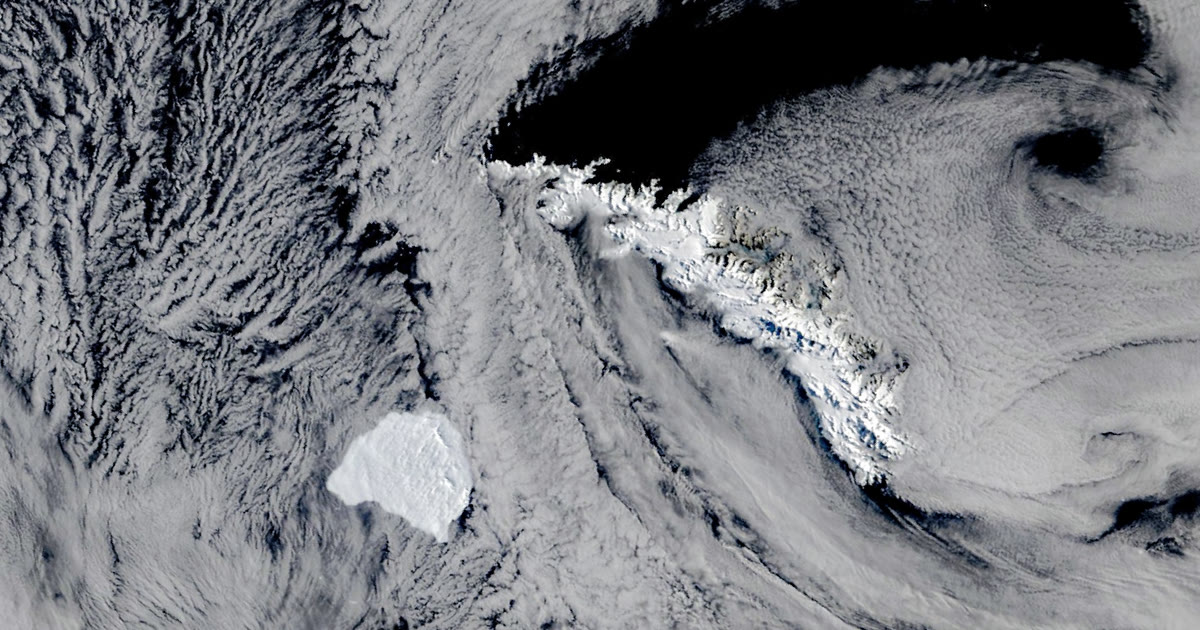
Iceberg A-81, a slab of Antarctic ice the size of a city, slows at the edge of South Georgia
A city-sized iceberg, A-81, has slowed off South Georgia after a 2,300 km drift. What satellites show, why sizes differ, and what is still unknown.
Almost all the world's shallow coral reefs face a high risk of collapse by 2075, IUCN finds
Coral reefs collapse risk: IUCN's first global check finds 96% of shallow reefs critically endangered by 2075. Why scientists still see a window to act.