A personalised melanoma vaccine cut the risk of cancer returning by 42% in a large trial
- In a Phase 3 trial of 1,137 people, a personalised mRNA vaccine plus Keytruda cut the risk of melanoma returning, or death, by 42% vs Keytruda alone.
- Patients had high-risk melanoma (stage IIB to IV) already removed by surgery. No new safety signals; it is too early to know if people live longer.
- Intismeran autogene is not approved anywhere yet. Merck and Moderna are talking to regulators; full data come at ESMO on 24 October.
After surgery for melanoma, the hardest part often begins. The tumour is gone, but the fear that it will come back stays. According to Merck, most returns happen in the first two years. A melanoma vaccine built from each patient’s own tumour has now lowered that risk in a large trial, and the results go before cancer doctors in Madrid on 24 October.
The treatment is called intismeran autogene. Merck and Moderna make it together and call it an individualised neoantigen therapy; most people simply call it a cancer vaccine. The companies say it is the first treatment of its kind to succeed in a Phase 3 trial, the final, large stage of testing before a company asks for approval. That makes this a meaningful moment for personalised medicine, and also a moment to read the numbers carefully.
What the melanoma vaccine trial measured
The trial, INTerpath-001, enrolled 1,137 adults with high-risk melanoma (stage IIB to IV) that surgeons had fully removed. Two in three people got the vaccine plus Keytruda, an immunotherapy already used after melanoma surgery. The rest got a dummy shot plus Keytruda. Neither patients nor doctors knew who got what.
The main goal was recurrence-free survival: how long people lived without the cancer coming back. After a median follow-up of about two years, the combination cut the risk of the cancer returning, or death, by 42%. At two years, 82.2% of people on the combination were alive with no sign of the cancer returning, against 70.0% on Keytruda alone.
A key second goal, the risk of cancer spreading to distant organs or death, fell by 38%. Merck says side effects were in line with earlier studies, with no new safety signals. Severe treatment-related side effects were similar: 14.2% against 13.4%. Fever, pain where the shot went in and tiredness were the most common complaints.
How does it work? Each dose is made from the patient’s own tumour sample. Scientists read the tumour’s genetic mistakes and pick up to 34 markers unique to that cancer. The mRNA then teaches the immune system to look for them.
Why the early months and the missing survival data matter
The benefit did not show at first. In the first six months, both groups did about the same. The gap opened after the vaccine course ended. That pattern makes biological sense, since the immune system needs time to learn, but the “58% after six months” figure comes from a supporting analysis, not the main result.
Two answers are still missing. It is too early to know whether people live longer; the companies report only a “favourable trend”. And no price has been shared for a medicine made one patient at a time.
Expectations were also very high. Part of the data appeared online early on 22 October, and Moderna’s shares fell sharply. According to BioSpace, investors had hoped for a result closer to the 49% drop seen in a smaller, earlier trial, so 42% landed at the low end of expectations.
If you or someone you love has melanoma
Is there a vaccine for melanoma you can get today? Not this one. Intismeran is not approved anywhere yet, so a melanoma vaccine FDA approval, or a decision by any other regulator, is still ahead. Merck and Moderna say they are now talking to regulators. The results apply to people whose high-risk melanoma was removed by surgery; they say nothing yet about preventing melanoma or treating cancer that cannot be operated on.
If this news touches your life, take it to your doctor. Ask whether a clinical trial near you might fit. Please don’t change any treatment based on a news story.
A careful step forward for the Moderna melanoma vaccine
The good news is real. A 42% cut in risk on top of an already strong treatment, in a large, blinded trial with no new safety worries, is a meaningful step. It also suggests that a vaccine designed for one person can be made and tested at scale.
The open questions are real too. Survival data, cost and how fast each dose can be made will decide who benefits. Unlike early lab leads, such as the brain enzyme study on memory loss we covered, this is late-stage evidence in people. On balance, it is careful progress, not yet a cure.
The full results are due in the New England Journal of Medicine. The companies have nine Phase 2 and 3 trials of the vaccine, including three large ones in lung cancer. Those results, and the survival numbers, are what to watch next.
Sources (8): every key fact checked against at least two
- Merck: Merck and Moderna will present results from landmark Phase 3 INTerpath-001 trial at ESMO 2026 Presidential Symposium (22 October 2026)
- Moderna: Recapping positive Phase 3 topline results for intismeran
- Moderna: Late-breaking data to be presented at ESMO Congress 2026 (21 September 2026)
- Cancer Network: Intismeran plus pembrolizumab reduces recurrence risk in resected melanoma (22 October 2026)
- Dermatology Times: Intismeran plus pembrolizumab improves RFS in melanoma (23 October 2026)
- BioPharm International: Intismeran autogene plus pembrolizumab meets endpoints in Phase 3 melanoma trial (19 August 2026)
- BioSpace: Merck, Moderna shares fall as cancer vaccine disappoints after data leak (22 October 2026)
- Yahoo Finance (Investing.com): Moderna shares plunge on cancer vaccine data leak (22 October 2026)
Related stories
Wind turbines have killed about 18.7 million US bats since 1981, USGS-led study estimates
Wind turbines killing bats: a USGS-led study estimates 18.7 million US bat deaths since 1981, and shows how design, siting and slower blades can cut them.
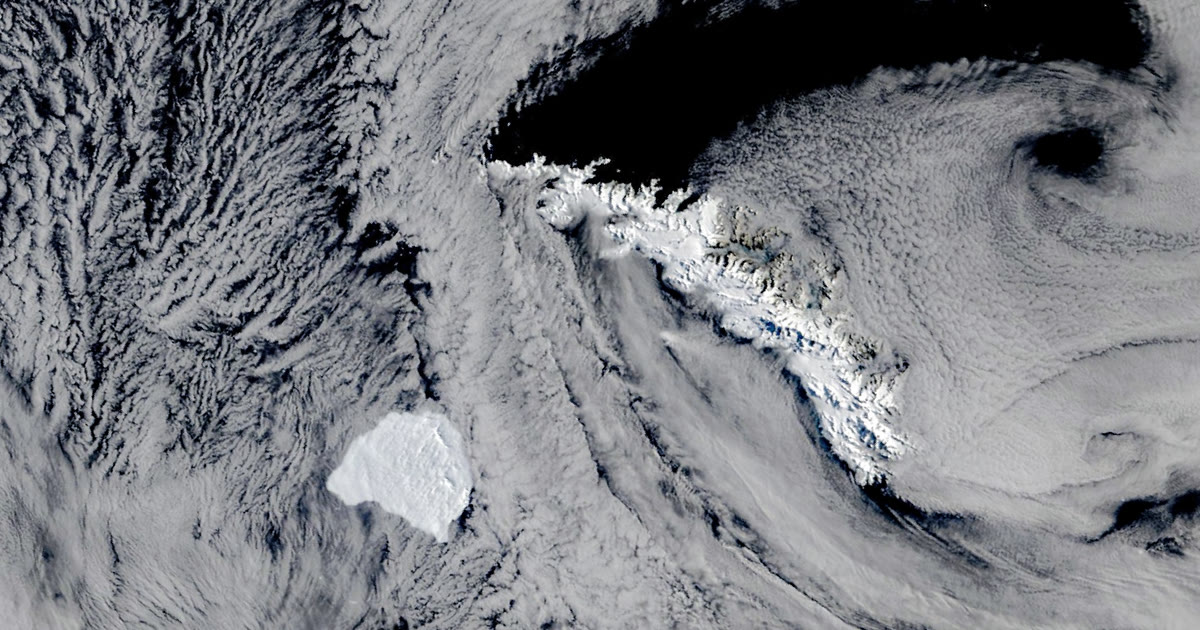
Iceberg A-81, a slab of Antarctic ice the size of a city, slows at the edge of South Georgia
A city-sized iceberg, A-81, has slowed off South Georgia after a 2,300 km drift. What satellites show, why sizes differ, and what is still unknown.

OpenAI says its AI disproved the Exponential Time Hypothesis, and two of the rule's authors will check it
Exponential Time Hypothesis: OpenAI says its AI proved the famous computing rule false. Experts, two of them its authors, are checking. What it means.